Sunday, October 5, 2014

Precious Moments in Time

Life is precious.   In the past two months, two friends have died.  Each was diagnosed with cancer less than a year ago.  In dealing with these losses, I find myself tumbling around what am I doing with my life here.  The recent days have created a longing for deeper connections, creative inspiration and more nature. 
Sharon and her daughter,
 http://selkirk.ca/
Elizabeth
http://www.vitals.com
This week marks my third year of living as an expatriate, and my second year in my cheap little apartment in the dusty chaotic city of Phnom Penh. I have a good life: a decent paycheck and cheap living, an insane number of national holidays, the relative ease of travel to amazing places in the region, living a life being chauffeured and waited on. Indeed, there are times when I am living the dream—walking between jungle and beach on the islands off Cambodia’s coast or the occasional surge of optimism when my Cambodian colleagues take initiative---  that gives me hope for the future and helps me resolve my reason for living here. 

Sometimes, there are periods when I find myself lonely and seeking the connections of community.   Instead of using my solitude for earnest productivity,  I find myself distracted by the colorful matching games on my phone, hoping for responses to inquiries or invitations I've made to causal friends and acquaintances or longing  for the giggly connections with lifelong friends when the timezone is all wrong. Alas, most days I find the scope and  lack of movement in my work to be draining.  This is followed by nights where I am torn between the desire to get out, learn new things and meet new people and the comforting routine of post-work exercise and an early bedtime. 

I’d planned for a respite to Kep over the recent Pchum Benh ceremonies.  The long weekend is when people of Phnom Penh return to their home villages to visit family and bring scores of food to the temple to feed the hungry ghosts of their ancestors.   On a happenstance gathering one boozy Friday night happy hour a few weeks ago, I uncovered the shared interest with a group of new acquaintences, so a group of us took the boat out to Koh Tonsay (Rabbit Island) for the day. 

Photo by Karen Green 
We met a young Cambodian man, Kompheak,  who shared our ferry and was traveling alone. Thus the four of us set off on a hike around the island.   The trail was generally clear, punctuated by beautiful plants and flowers, stretches of isolated white sand beaches and small fishing shacks with an occasional rooster.  It was easy going for the first part, but as we continued to circumnavigate into the far reaches of the opposite shore the vines’ small barbs caught onto clothing, hats and even jewelry. The sun was high and it became very hot.  The trail became extraordinarily muddy, creating high jinks in flip flops. We trepidatiously waded through a suspicious swamp of standing water. Kompheak discreetly mentioned that he was exhausted.  

In the few moments following, we burst out into the front yard of a young family: a fisherman, his wife and their four children.  The bay in the front of their bamboo and palm house contained a flourishing seaweed farm.  A string with plants attached ran between pegs, discarded plastic water bottles acted as floats.  His boat was moored just offshore.   The younger children stared and the two oldest boys(both under 10)  set to work preparing the boat for departure as the fare was negotiated for the ride back to the beach where tourist services were located.  The fisherman, clad only in underwear, started the small engine with a string after putting a small bottle of gasoline in the engine and moved back to the rudder as the oldest son held the propeller in the water.  We puttered away from their home and around a couple more isolated bays.  The boy at the bow didn't know how old he was, only that he was born in the year of the monkey.  It was a great way to spend $5. 

Photo by Karen Greene 
On the boat trip over to the island earlier that day, Kompheak grumbled that this island was recently sold to the Vietnamese on a 99 year lease.  In true ruling party fashion, the Prime Minister has awarded many of these contracts to developers without any input or respect for the fact that they are public lands and have sustained people for generations.  A couple recently profiled in Forbes has profited considerably from this rampage. The previous concessions awarded to the company (not actually Vietnamese)  have resulted in uprooting entire communities and destroying the ecosystems and subsistence farming.   For the people of Koh Tonsay, they are aware of the shift but there will be no information.   For another small isolated island just east of Koh Tonsay, their transition has already begun.   

Soon, the fisherman and his family’s lives will change forever.  They will have no control; there is no mercy.  In the midst of all this, we find that it is the relationships that matter the most.  Our friends, our families, the things that we care about and that which sustains us.   We all have to take the balance between the need to be solvent and the effort that makes our souls really fly.

Life is precious. With the fleeting moments that tick away and the ever increasing rate of buildings and roads and short-term economic concessions, it becomes imperative to slow down.

For me, I'm committing to taking my fourth year abroad to do good stuff, make an effort to get out a little more, keep reaching out to friends and writing and finding new trails.   


Someone signed it in the lower right corner, but its illegible.  

Tuesday, September 16, 2014

Balancing on a Perch Amid Great Change

A five way intersection:  pagoda, LED display board,
large face on a billboard  and two construction sites. 

For the second time in a week, I saw very young boys working on a job site  of one of the many "western-style" condo complexes going up around the city. They were loading the rubbish trucks, wearing flip flops and long shorts as they hauled broken bricks, sheet metal strips and chunks of cement. On the next morning ride on the sometimes precarious perch on back of Mr. Pichada's motorbike, I counted 20 construction projects, both buildings and roads, within my view.

The most monstrous and, in some ways telling of Phnom Penh’s tsunami of change, is “Olympia City: the miracle of Phnom Penh”. The Chinese construction firm has orchestrated six cranes, at least three elevators and kilometers of green netting over the  towering 11 floors of cement to become retail and condominium complexes. Many of the units are pre-sold, primarily to Chinese, Malaysian and Singapore buyers. The expats look to each other with incredulity, “Who will live in these places?” The private sector replies, “ASEAN is coming. And Cambodia will become a LMIC (low to middle income country.)”

ASEAN is the Association of Southeast Asian Nations, uniting was formed in 1967 by Indonesia, Malaysia, the Philippines, Singapore, and Thailand to promote political and economic cooperation and regional stability. It now includes Cambodia, Laos, Vietnam, Brunei Darsallam and Myanmar. If it achieves the goal for economic integration in the region slated for the end of 2015, the number of workers and shoppers from those countries will increase as goods, services, labor and investment capital is facilitated. Apparently tariffs will be reduced and administrative procedures streamlined. It could be all talk, but there is definitely movement afoot.

Last week, I was waiting in traffic while a parade celebrating ASEAN unity and road safety went by. Mud-splattered trucks emblazoned with ASEANUNITYTOUR stickers and festive with Malaysian flags fluttering whizzed through red lights and the large men at the wheel waved and honked as the police held everyone back for the dignitaries ( a common occurrence here.)


When I was in Malaysia a few months ago, I heard a lot of public service announcements cautioning parents not to let their children stand up on the seats so that they could stick their heads out of the sunroof. Just last week, I saw the same thing happening with one of the many gold Lexuses that frequent the roads here.

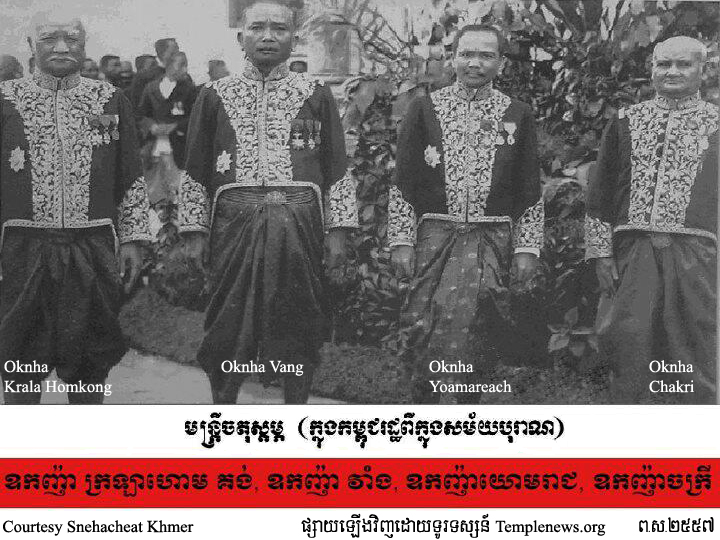
Rolls Royce just opened a dealership here in June 2014.. The Minister of Industry and Handicraft said at the opening press conference that “I believe there is room to sell Rolls-Royce in Cambodia. There are many Oknhas now who can afford them,” he said, referring to people granted the honorific by the King in return for assisting Cambodia’s development.

The ranks of the Oknha-- once a highly esteemed designation slating back to the early days of the Kingdom- have grown considerably in the past ten years, going from only 20 in 1994 to now over 700 as reported by the Phnom Penh Post a couple weeks ago. The designation comes from the Royal Palace, with the payment of $100,000 and a commitment to building or supporting charitable projects. However, the increase in numbers generates suspicion that the title is not used to support the poor, but instead to gain favor from the government. Son Chhay, opposition party leader simply said, "it is now a badge of wealth, corruption, of deforestation and of land-grabbing,”


http://www.templenews.org

I have heard the NGO and government sector leaders caution that Cambodia will move from a low income country (LIC) to a low middle income country (LMIC), probably within the next 10 years. Naturally, the behavior of the Oknha and the other overseas investors are driving these advances. The implications of this shift for government are clear- estimates are that 30-40% of the central government's budgets are funded by donor aid, and this will dry up when the transition is official. In the past few months, I've noticed the tax department is rigorously collecting, work permits (with back payments required) are being enforced and the price of a tourist visa increased to $30.

The rich are pursuing the quick profits of resource extraction and demonstrating their wealth with prestigious cars, yet the poor largely still wait patiently on the margins and silently acknowledge their perceptions of their destiny. The middle class squirms to define themselves, seeking the trappings of private schools and a decent vehicle while living within modest budgets.

The shift to prosperity has now fully manifested in the Aeon Mall a tribute to all of the trappings of the rich and upwardly mobile. The mall comes with its own lending division, that now sees 3500 people a month (with an average monthly income of $500) come in for loans for TVs, refrigerators and other appliances.


I understand the hunger for discretionary items. I replaced my notoriously incompetent discount phone a couple of weeks ago.  The damage was just over $300, a little less than her monthly take home salary. She noticed it and commented, "We usually buy secondhand."  My heart sagged a little, recognizing the disparity of our respective ages and incomes, and social/cultural backgrounds. This little sag happens to me nearly every day in various contexts, recognizing the myriad of struggles I see every day.

Over and over,I see both the very poor (the people we serve)  and young, emerging middle class families (our staff) hanging on for this wild and terrifying battle between the cost of living and the adequate wages. The people who come in from the rural provinces try to eke out a rice harvest amid the vagaries of a changing climate. They urban poor find themselves evicted to make way for high-rise shopping malls or speculative schemes, then often relocated to places far from education, a job or medical care.

The White Building: one of Phnom Penh's examples from Vann Molyvann.

News released earlier this week states plans for eviction and demolition,

with reports of an insider deal on new construction in the works. 

On the daily morning rides to work I sit, trusting and balanced, as Mr. Pichada weaves among cars, past the construction sites and among all the people having a start to their day.  Some days he stops a little abruptly and occasionally we breeze through green lights with a near miss against the errant crazyboy.   
There is a constant attention to the maintaining the internal reserve to keep my balance in this mad, chaotic, rapidly changing environment.   It is for this reason- while waiting in traffic-- I often find myself looking skyward to the terrace gardens that are prolific on my commute.   I remember the dragonfruit tree that I noted on the side of the White Building in one of my early accounts of Phnom Penh living-- the brilliant pink of the fruit heralding growth and stability among a decrepit looking building.


The residents of the White Building- deemed iconic and housing a community of civil servants, many who have been there since it was built in 1963-- are not going without a fight. I know all these young families- now focused on providing fair opportunity to their children and disgruntled with the patterns of greed and corruption-- will have a chance to rise up too.  But in the meantime, life in Phnom Penh is a wild ride.  


Sunday, August 31, 2014

These Are My People

It was magic hour on the beach.  The sun setting low and casting a long heeled aura of golden hue over the out-wash of the waves in the sand, the sky and the people. My sister Barb, nephew Ian and I were settled in lawn chairs, watching the scene and waiting for o-dark thirty and the annual fireworks show to begin.
 Adolescents milled about,chattering about the double dare to dip in the brisk Atlantic ocean before the sun set.  Young children polished their sand castles. Parents joked and chatted.  It was small town America and the national holiday, of celebrations and place, of peace and prosperity.  Red white and blue striped bunting hung over the high streaming alpenglow-touched clouds.

Growing up in Poughkeepsie, New York---the suburbs of which were a company town of IBM--the fourth of July was a drive to a large field overlooking the Hudson River.  The massive crowds forced our family to stick together on the reclaimed golf course, hanging in the waiting for the show. There were long lines of taillights to follow on the way home.  Later in life, while visiting a friend whose husband was playing a gig, I attended a swank party at an estate overlooking the same Hudson River.  Luanne and I sipped a cocktail and smiled when the the bass guitarist played a ripping version of the Star-Spangled Banner in the moment the first rocket went to mid-air.  

The music was different one morning in Alaska on July 4th, 1996   I stood in the kitchen of a campsite along Russel Fjord, making breakfast for the group I was leading.  Below me, the outgoing tide and hundreds of berglets from the Hubbard Glacier created a parade.  Immense in the power of all forms: the strong tidal current icy cold water from the Gulf of Alaska, the jostling, jamming and tumbling of the bergs and the raw elemental power of it all mingled with the rich aroma of the final stages of a frittata. 
View from the campsite. Photo Ben Hamilton, Pioneer Videography.

I’ve been back from my crazy leave-taking of Alaska for over a month and reflecting on the aspects of home and community. I am without mortgage and using a rented physical address.   My belongings are stacked in plastic crates and duffel bags.  I still define myself as Alaskan, where I lived for over 20 years, but now I  have shifted to “snowbird” status.  My roots are shallow.  Currently I have no investment in building soil for my own garden, just focused on pots with plants.

This is not entirely uncomfortable; I have always been my happiest moving around.
But nothing replaces the feelings that arise when you see friends of a long time and that shared history.   Or when you connect back not only with a physical place-- but with the spirit of who you were in the past and how far it has been since.   The space of a land, people and the moment in time that mixes into a special, irreplaceable gem of memory, thought and sensation: home.  

The trip back to Alaska was an upwelling, a deep clear basin filled  by deep source water seeping toward the light. The experiences built my character, cemented friendships, pushed boundaries and formed irreplaceable networks and directions for relationships, careers and connection to the land.  And it all began with a copy of Alaska magazine. 

I’d gotten a wild hair to said to myself after my second season as a river guide on the Rio Grande in Big Bend National Park, “If I am going to be a wilderness guide, then I need to be in Alaska.” After a series of letters to advertisers in Alaska magazine, I got an invitation to apply.   Instead of writing the staid response to the “Introduce yourself” question, I went on a creative limb and structured the piece as a TV talk show interview.   I got the job.

Months later, I was battling with the US Coast Guard and won- becoming the first diabetic in Alaska to receive at US Coast Guard commercial boating 6-pack license to traverse the notoriously unpredictable Skilak Lake.  I was on the fast-track of learning Alaskan ecosystems and surrounded by a group of like-minded peers all giddy with the endless sun and frenetic pace of summer.  Across the lake, the ridges of Knuckle Mountain punctuated the skyline. The only way up was a steep, rugged trail that popped up into glorious tundra and vistas of the lake. 
The view from up there. Courtesy Alaska Wildland Adventures.

As I was contemplating what to do on my Alaska trip, the place returned to me.  An inquiry and luck resulted in an invitation and a chance to revisit.   On that same place of expansive tundra in 1992, I'd had a  chance encounter with one of Kenai Peninsula’s caribou. In that moment, I made a promise to myself and the caribou that I would go to the Arctic.   On my last river trip in the Arctic National Wildlife Refuge in 2008, I’d promised myself that I would go to Africa.  In Tanzania, the network opened up for development work in SE Asia.   Now, supine in the nostalgic aroma of laborador tea and wistful memories, I could only face the vistas and wonder what was next. 

In the evening walk last week, the rumble of thunder was not unlike the rolls that punctuated many a childhood night in the Hudson River valley, where  legends of bowling old men and Rip Van Winkle's very long sleep were a part of the local yore.  The weather and chance urban wildlife encounters I experience here are,  in the aftermath of a torrential rain, the glimpse of a rat that makes a frantic, desperate swim across the flood in the street to scramble to the high ground of sidewalk and generating shrieks from shopkeepers.

This stage-- a determined yet still far off departure in sight-- is one of testing and exploring, researching and collecting ideas.  A waystation, as it is for so many expats here, that results in one of the first questions that comes up in introductory conversations, "How long are you planning to be here?"

 I'm mulling over if my next house will have wheels or just be a plot of land, or maybe a few plots of land in different places or maybe no house at all. I'm forming goals, plans and inquiring on ideas.  I have a keen idea of what community I want, but the place is still an wispy fog on the horizon.

However, on one of the many flights over the wild,unfettered wilderness of the Gulf Coast in the mid-90's, the expanse of wilderness between Yakutat and Cordova spoke to me in such a very touched me so deeply.  As one is want to do when flying over vast spaces in a airplane cockpit smaller than a Volkswagon bug and considering the scenarios, at that moment I felt that I wanted some of my ashes dropped from the door of a low-flying Cessna.  Alighted and scattered amid wild places. Home.


Street 214, where I live.  After a big rainstorm. 


Monday, July 28, 2014

Leave-taking

In the end, the toaster stayed along for the ride.  In the mere 9 days I was in Anchorage, I managed to clean out my storage closet, re-gift a lot of belongings and hone my possessions down to a two duffel bags (camping gear), four Rubbermaid tubs and a few boxes.  All of this was conducted with a honed project plan punctuated by welling bouts of both stress and sadness.


Phase One of the stuff shuffle was my review the assumptions that forced the pack in the first place.  At the time,  I’d kept the bare minimum of the house (no furniture) in place in case I wanted to return, hoping that I would return from world travels with a someone else. I kept the trappings of the home together, hoping to rekindle. Remember July 2011?

Phase Two was to consider what I might "need" next.  The mindset with which I sifted belongings went to an image not yet formed, a the tiny house somewhere here or there, hither and yon.   A place of which I have yet to create and is percolating to form a richer and more fuller vision in the future. There were many times I considered a home, especially on the road. 
2009, with dog and visiting nephew


Between 1989 and 1995,  I worked as a seasonal guide year round, spending time at the front desk of ski resorts in Colorado in the winters, tromping around in the tundra in Alaska in the summer and  rowing rivers in the heart of the Chihuahuan desert in West Texas in the spring.  

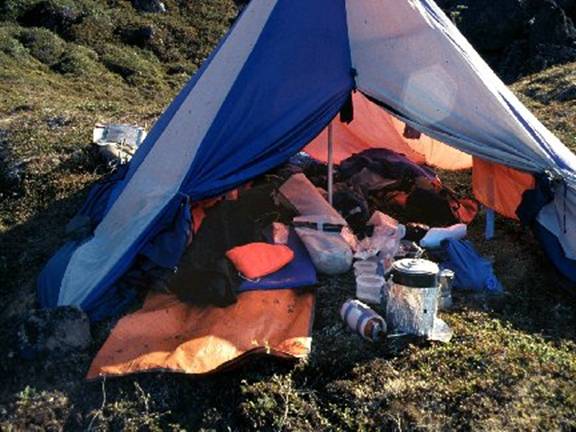
One season,  I’d suggested to the boyfriend at the time that we build a tent platform for our megamid home, a pyramid shaped single pole tent on the hill behind the boathouse.  It was a windy, dusty shelter.  Our neighbors were fellow boatman whose primary goal of each evening was stumbling up to the tent after a night of beer drinking. I came off from the river one day after a particularly blustery day and found my inflatable mattress impaled on the downwind barbed wire fence.
Representative photo. From: nkhorizons.com


 After hours and hours on the river, I would often ascend the hill and fall asleep fantasizing of clean cotton sheets on a forgiving bed, a gentle breeze through gauze curtains and a single daffodil on the bedside table.   Throughout many of those journeys, I longed for a familiar turn of the key in the lock and the reassurance of my own physical space.  Years later and when I could, I bought my house.

Returning to my house in Spenard made me realize how much I’d changed since leaving it three years ago.  I was perturbed but resigned with the untended state of the gardens, astounded my how much I’d left behind and pleased with the tenant’s paint job.  I was ready to let go and thus the gleaning began. 


Over the days, I reviewed and evaluated objects.  Was it small and irreplaceable enough to keep?  Would someone else like it and appreciate it more? How many boxes would be a burden to my friend’s allotted storage space? I remembered some things that were considered very precious at a time, but were lost over the years and for which I have always regretted: a diligently crocheted bag bartered for knitting goods , my grandmother’s bracelet, a miraculously artful beaded winter hat I knitted.  What is my attachment to these things?  What would I have to gain by letting them go?

In that questioning of those relationships between our belongings and ourselves, there was a reassurance about identity and self.    We are created with a soul, which is then influenced by our relationships, our experiences and the places where we choose to spend time.  I had to say goodbye to the house forever, permanently end the 16 years of investment that entailed both significant and minor self-taught home improvement projects, a dedicated cultivation of  microbial soil and the conscientious creation of community.
Late one afternoon, enmeshed, overwhelmed and surrounded by the piles of stuff, I stopped bending over and stretched to look at the sky.  That moment, a huge Alaskan dragonfly alighted on the roof of the storage closet in the backyard.  Emotions welled up and I breathed deeply to say hello. 


Years ago, while I was working in the bowels of downtown Boston as a street outreach worker in 1986, I took solace in a weekend volunteer caretaker job on the Saco River in Maine.  Each morning and evening, thousands of dragonflies would hover to feed on the prolific mosquitoes.  Since then, I have surrounded myself with their image.  Seeing this totem alight was a reassurance that I was on the right path.  I was completely and totally enmeshed in this moment of transition, of letting go, surrounded by the objects of my history and those tools and objects that defined my self for so long. There is a vast unknown, strengthened by character and deed, of possibility and of fortune, destiny and luck.

 Now I knew--  only when we let something go can we allow something else to fill its place.


What was left for the next step.

Sunday, June 15, 2014

Traveling Light, part 2


 It's now been about a month since I returned from Malaysia on May 18.   Since then, it's been a grind of really hot weather, deadlines leading to deferred exercise, preparations for selling the house in Anchorage, two phone melt-downs and  reactions of all forms including a waistline increase and self-imposed isolation. I have felt little creative room I have to write or reflect on the trip.

With now just a week or so before I head to the US, I had to overcome.  In a nutshell~ this trip was a complete whimsy generated by a banner ad for Air Asia that appeared while I was considering what to do for the 3-day King's birthday holiday.  The ticket was just over $100 and I decided to take extra days around the T-W-Th paid time off. Hence a ten day trip.

Stop #1:  Kuala Lumpur to visit an acquaintance from last year's writing workshop in Bali. Her beautiful house had a lovely, large and loveable cocker spaniel named Tumbles (or as I giggled to myself repeatedly by using other names like Gaggles, Tussles, Huggles, Grumbles, Fluffles or Tassels.)        
Taken from the outdoor porch. Lots of glass,
marble and terrific company! 
KL is a very interesting city, filled with energy, diversity and lots of cars. Indians, Chinese and Muslims live together in relative peace (but some serous conflicts).  Leone and I went to the museum, I met with a breast cancer expert who visited the hospital last year and she was kind enough to meet me on her Sunday and take me for a look around downtown.  I went up a lot of steps to a temple in a cave and saw a huge snake, then did some writing in the middle of a cafe surrounded by dense jungle during an incredible thundery torrent of water.
What's up with the little green god? 


Pouring rain turned this trickle into a torrent in no time at all! 
The bird park provided an excellent opportunity to
see a majestic pelican up close. One of my favorite birds ever.
Stop #2: Tama Negara National Park. Malaysia's largest national park
I was gleeful  to be visiting  one of the world's oldest ecosytems.  It was apparent, nearly from boarding the mini-bus, that it was a stop on Southeast Asia's infamous banana pancake trail.  I was neatly shuttled from one touristy stop to another on the mini-bus and relegated to a shared seat on the narrow longboat through the jungle.  I caught a glimpse of a fantastic blue winged leaf bird before we zoomed into the gateway community of Kuala Tahan.

I found a guesthouse run by a Muslim family, settling into a little place for $7 a night and going to explore.  Before long, it was clear that there were about 4 different activities to engage in around the park:  rapid shooting and village visiting, a night 4WD tour (our bright lamps stun wildlife and they can't move!), guided hiking and boat trips with iterations of waterfalls.  All were advertised in large billboards around town, each departure time punctuated with groups of young people eager for diversions.

I elected to spend my first day going for a walk by myself with a mission to do the canopy walk (longest in the world) before the crowds of guided hikers made their way.  It was easy to start- with boardwalks and signage-- and after knocking out the first goal I decided to attempt the closest
Originally built as an observation station for
the forest canopy, the walk is a fantastic
 opportunity to both experience acrophobia
and the upper story of the jungle. 
 hill summit- Bukkit Teresek.  In an experience reminiscent of hiking up and out from the Colorado River in the Grand Canyon, I passed many tourists coming down, following their guides. Some dressed in colorful saris and headscarves and now one looking particularly tussled.  I, however, was attired in my favorite jungle hiking outfit, complete with my made in America bandanna.  On the upwards, I went up stair after stair, perspiring heavily in each step.

Jungle all the way!  Taman Negara is
Malaysian for national park. A
showpiece of land management with
tigers and other large species still inhabiting
the huge area of the park.
At the top, hordes of sweat-eating bees were patiently awaiting the arrival of yet another water-radiating human. It would have been great to take in the view, but the sound and sense of the bees (indeed, they were not there to bite, just to drink) was tortuous.  I managed to take a quick snap shot, and then hightailed it down.

 I love a loop trail; I'll always pick that instead of going out and back.  So when I saw the tattered rope leading down the hillside, it made sense to try and go. It was a stream bed trail, punctuated by rocks and slippery muddy descents. Small groups of the bees would make an occasional appearance,  bird songs surrounded me but no sightings of the singers.  Even small sections of old and abandoned walkway were unstable, the plastic lumber rotted from rain and age.  I became a bit overwhelmed with the irrational fears of terrorist macaque monkeys and the vast unknown of this dense ecosystem.

In the relative safety of a very large tree root blissfully free of  enormous red ants, I stopped to catch my breath.  I was relieved to hear the voices of others, and surely enough two young German men made their way down, complaining about the bees and exclaiming over the rustic nature of the "trail".  We hiked together until we hit the main intersection that followed the river, and from here I was left to trudge farther behind another uber-fit Euro family with two children under ten. At this point, I felt that my entire body had been turned inside out, my clothing drenched and sticky. My sneakers soles separated from the foot bed. ( I had foreshadow of this in Vietnam but I thought I could get away with it.)   Before long another boardwalk trail signaled a return to the park entrance.  A Chinese man with a pristine white towel under his ball cap, accompanied by his female partner in short shorts  and Keds, asked "What's ahead?  Mountains? Jungle? River?"  "All of it." I replied, "but the trail down from the mountain is a bit rough."   He looked me up and down, "Yes, I can see that."

In nearly every other stop on the Southeast Asia backpacker trail, one would expect to see lots of bars. But in this Muslim community the restaurants closed by 9pm. Cats are everywhere with nary a dog to be found (Muslims think dogs are unpure).  I had a late afternoon shower, nap and requisite Naxproxen dose, and an early dinner. It was good to rest my very stiff thighs the next day and went for a boat trip up the Latah Berkoh river and finalized my plans to spend an overnight in the Cameron Highlands.
The highlight of this boat trip was when
the guides turned off the motor and just paddled
down the rapids in practiced perfection. 
Stop #3: Tanah Rata
If I have learned one thing from traveling in Southeast Asia, it is that anytime you take any form of transit, you must not eat anything beforehand and pack a barf bag in your carry-on.  As we pulled into the Eight Guesthouse,  the proprietor exclaimed, "the queen! the queen!"  Apparently, there are not many women over 50 checking into this place.  Within minutes, I was set up with a bed in the dorm, a tea plantation tour the next morning and a bus ticket to Kuala Lumpur in the afternoon.

This is the new normal for 20-something
backpacker chicks to leave in common space
in a 6 bed dorm. I feel old. 
I had a great overnight visit there: a lovely host, a delightfully cool climate  surrounded by mountains and farms and gift shops with giant stuffed strawberries,plenty of hiking opportunities, Indian food, scones and tea.   However, the bus trip down was worse than the mini-bus going up, despite my relatively empty stomach I was in agony for most of the curvy, fast trip with only 6 of us on the entire bus; the driver gleefully whistling tunes and tailgating cargo trucks.   I was so happy to get on the highway.

Our great guide explaining tea,
and the Phylliidae leaf insect. Wow! 
 the mossy forest


My last night, I was in a small box of a hotel room near the airport in KL.  I had to leave for the airport at 4am despite protests from the front desk staff that because I was leaving from the brand new KLIA-2, that it was recommended to be at the airport 3 hours in advance of my 6am flight.

This trip made me wonder-- perhaps being away for a week a month in the scope of a consuming work load was too much.   Perhaps because I was "in" my work email for nearly the entire duration, that I never really got away.  Maybe being so close to the tourist trail made me feel more lonely than going out on a limb in places less traveled. Regardless, soon I will be returning to both homelands-- the first time back to Alaska since I left in October 2011-- and the promise of a new beginning of unfettered liberation from debt and obligation.  

Sunday, April 27, 2014

Traveling Light, Part 1

The regular tapping of the mallet against a chisel faded in and out as I passed by on the back of a motorbike on the road under construction between Nam Ban village and Dalat in Vietnam.  “I will never complain about my job again”, I thought to myself as the late-middle aged “easy rider” motorcycle tour guide carefully navigated through ruts of rich red mud and large yellow machinery.

The men squatted on top of 8 foot square chunks of beautiful granite, endlessly chipping lines into the slabs.  There hands were bare, but nearly all other parts of their body were covered.  The incessant labor yields about 10,000 Vietnamese dong (50 cents) per small rectangular brick.  The workers slept on bamboo slats surrounded by blue tarps, the square shanties set up on the side of the roadway, amid the rubble and slash of a new road.

I was making new inroads myself, albeit much less laborious.  This trip was the first time in many years that I traveled without an advance reservation upon a destination. It was also the first time to Viet Nam and the first solo trip in a couple of years.  The general itinerary was one week- three days in the Cat Tien National Park and three days in the mountain town of Dalat. It was a rough few weeks in advance of the holiday: staff distracted with the Khmer New Year holiday and my closest colleague moving on to a great new position.  It was time to go on vacation.  

As I got off the bus in Saigon (also known as Ho Chi Minh City) right in the middle of the city’s tourist district, I looked around to get oriented and headed in the general direction of where I knew there would be guesthouses.  I meandered down an alley and an old man gestured to a place, so I went in. It was a nice family-owned place. A basic room with aircon. Breakfast included. $14. The husband, a doctor, gave me a complimentary packet of vitamin C tablets because I sneezed when I ate noodles for breakfast.

This general approach- simply going with the flow of the events around you—was the hallmark of this trip.  I hiked in the deep jungle with a couple of British guys, biked all day with an American woman from the midwest and saw birds, wildlife and magnificent trees. I rode a sleeper bus for the first time, happened across another cheap, family run guesthouse,  bought a plane ticket in cash, walked for miles in the rain and got a great deal on an all-day motorbike tour of waterfalls, pagodas and organically processed (i.e. pooped out through the colons of weasels) coffee with a guy who barely spoke English.

This serendipity and positive flow, albeit relatively modest, felt like it reappeared after a long dormancy.  In the breaks between the intensity of seasonal work between 1990 and 1998, I often planned journeys that meandered. I explored new places, reading richly about the place, using paper maps and intuition to guide my way.
 I wrote a lot, met all sorts of new people/characters and was simply content in being myself in transition.  Naturally, I often longed for a travel companion, but frankly I was largely content to be on my own path and at the wheel of my trusty toyota station wagon.

Now, my packing system is very deft. light and utilitarian. I have a little more cash to invest in experiences and local guides. The internet is a tool that has changed everything.  My smart phone, journal, kindle and a small packet of paper logistics is all I need.  The unfettered flow of vacation amid natural places was a great antidote to the muscular paralysis of my day job.   My dream schedule  involves rigorous activity every morning, naps and reading in the afternoon, and a short walk and reflection at sunset.


Here are a few photos from the journey:


The mighty Mekong river.  The bus station was a teeming mass
of people waiting, streaming into bus doors and general mayhem
on the Saturday morning before Khmer New Year. 


The sleeper bus from Saigon to Cat Tien National Park, a nice way to stretch out.
Upper level is a bit nausea inducing. 


The guide scampered to the tree top to gather fruit. He was a member
of the tribal minoritysupported by the Ta Lai Longhouse ecotourism scheme.
Lots of great stuff on this half day hike, including
beautiful tropical plants that emitted red and yellow flowers through the root system. 


Vietnamese nun taking photo of her friend
 dressed up as royalty in Dalat's summer palace. 

Dalat's crazy house. An epic and bizarre architectural
tribute to humans and their relationship with nature.  

These old-growth bonsai are just remarkable. 


 Thank you monks for making it completely clear.
White people take heed. 


Elephant Falls. Stunning. A trampoline and a meager
 iron fence were the only things at the cliff at the top. 


My guide, Mr. Diaw, leading me down the
highly sketchy path to the bottom of the falls. 

One Buddhist diety at Linh An pagoda; interesting
to note the four faces as this is a key icon
in Khmer Buddhism. The second diety in this temple
 had similar hands, each with an item on the palm. That's
the image on my smartphone. 

Silk worms. 
Their cocoons are jumbled around in hot water to unfurl the threads
that are bundled on spools.

Spools woven into fabric.


“Live with intention.
Walk to the edge.
Listen Hard.
Practice wellness.
Play with abandon.
Laugh.
Choose with no regret.
Appreciate your friends.
Continue to learn.
Do what you love.
Live as if this is all there is.”


Sunday, March 30, 2014

Steamy Stagnation

In recent days,  the temperature is steadily gaining momentum.   The midday foray across the street to forage for lunch becomes an eye-squinting sweaty march for provisions.  The hallway just outside my office is cool from the aircon leaking underneath the bottom of the doors.  As I turn move across a skybridge to another building, the heat hits like a blast from a clothes dryer. In the hospital's courtyard garden, people receiving medical care at the hospital overtake every wooden bench for lying down.  Small children sleep splayed out on the ubiquitous blue plastic chairs, their caregivers half dozing nearby.  
https://alum.mit.edu/sites/default/files/migrated/news/WhatMatters/images/choi_hawley_cambodia_man_fan_483.jpg
Everyone gets a little grumpy this time of year, sleep deprived and tired of the sticky patina of sweat, exhaust fumes and the ever-present Phnom Penh dust. I’m now using two fans  in the bedroom, angled from both floor level and wall level to keep a steady breeze moving through the night.  I routinely use the highest setting for the ceiling fan in the living room, overcoming my fear of it spinning out of control and wreaking havoc.  Its faithful whirling makes an empty beer can drift in negligible circular movements. 

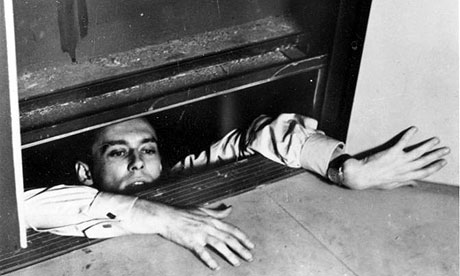
This time of year I find myself drifting into the “western apartment fantasy”, a recurring vision where someone else supports my residence in an immaculately maintained building. The dream place has a shaded rooftop pool, a lovely balcony and a bedroom where high quality linens are placed on a firm yet forgiving pillowtop mattress cocooned by gentle aircon.  Several weeks ago I attended an open house reception for a building such as this, located across the river to overlook the Phnom Penh cityscape.  There was free flow wine, a lovely rooftop beer garden buffet (on the same floor as the decadent kids play room and adjacent gym) and good company with a variety of work colleagues.  Then, on the 17 flight descent  to the parking garage,  the elevator jolted to a halt, punctuated by a loud thunk.  

There was a moment of silence among the three of us.  I pushed the alarm button three times in a row.  “Hello. May I help you?”  a polite heavily accented voice answered promptly.  After stating our problem, the young voice pertly replied, “Please wait ten minutes.”   Shortly after, in what seemed like much longer with my prison mates impatiently fueling the general anxiety in the small space, the doors were forced open.  Our elevator was four feet below the floor.  We started up at the security guards, somewhat bewildered.  The rustled around, passed down an end table and then we were liberated.  “Please”, the uniformed guard gestured to another elevator. “Oh,no thank you.”, we all replied in unison.  “We’ll take the stairs.”  More and more, I find myself living with a fatiguing  frustration created from a shiny façade that hides the all too frequently shoddy infrastructure under the surface.   

I am still toiling through innumerable projects at work, consumed with a workload that fuels impatience with my colleagues.  At times I’m dismayed about deficit problem solving skills and motivation, and incredulous of my perceptions of lack of competence.  My hopes and dreams for institutional capacity building have been foiled by the recent resignation of a close colleague, whose departure represents a huge step forward for his professional career and gaping cavern of responsibilities in the wake of his upcoming departure.  Some days I look longingly at the crisp clear photos of bluebird spring skiing adventures in Alaska and reminiscence  about cold air.   

There's a pervasive sense of being a little stuck, of not wanting to move more than you have to to get anything done.  The upcoming Khmer New Year is a huge national holiday celebrating the end of the harvest season, the arrival of the New Year angel who also heralds some predictions for the next year.  
A model portraying an angel carries a statue representing the severed
head that marks the beginning of Khmer New Year. Photo by Post Staff
 We are having the office party on April 4th, also my 52nd birthday. This annual event has consumed significant staff time to orchestrate, plan and rehearse (something that fuels a bit of consternation.  Does it really take three people to go shopping for the staff gift?)   I've been measured for a new dress.  The seamstress is now already a day late in finishing it. 

 Most real action is getting postponed until after the holiday. Most evenings, groups of men gather with their shirts pulled up over their bellies to cool off. Everyone waits for the rains to come.   Only the trees, showing off in the middle of this languorous  season, are blooming in beautiful color and rich fragrance.