Saturday, December 15, 2018

What Resilience Looks Like

I'd been thinking about writing about the clammer that works the low-tide flats just outside the front yard.  I sit in my bathrobe, the sun rising gently, with a cup of coffee and wonder what my body would feel like if I had to do his job. Bending over repeatedly, sinking my clam rake into the mud and back, then picking through the cold silt looking for my livelihood while the gulls circled overhead.

I changed my mind on November 30 when I learned of my Alaskan friends who spent their morning quivering and rolling during a 7.0 earthquake.  It would still have been dark then. Kids were in school, people were on their way to work, and then their world changed.

I tuned into the Alaska news and remembered my experiences with earthquakes. Feeling the roll build gently under your being, or sitting at my desk on the fifth floor and watching the computer screen rock back and forth. In the seconds of any quake, you wonder if this was going to be a big one. You remember the idea of a go-bag that never manifested. As the shaking subsided, my heart rate returned to normal and the awe of being in touch with nature returned.

While I am growing to love the old granite mountains and the coast of Maine, I miss being so close to the edge in Alaska. I miss the moose in the front yard, the silty ice bits in Cook Inlet on a sunny winter day and the aplenglow view of Denali from downtown. The raw evolution of earth itself is present every time one went out to the rivers, the mountains, the sea and the neighborhood.


I also miss the tough, goddammit I'm an Alaskan mentality that separates the extreme northerners from the rest of the "Lower 48."  Once the fractured glass had been swept up and everyone was deemed safe, Alaskans created memes.


Monday, November 5, 2018

Getting Ready for Winter

Mainers are in a flurry of getting ready. An early cold snap and a dusting of snow on the deck a couple of weeks ago escalated the natural rhythm of the season. Firewood got gathered and stacked. Hatches were battened. A frenzy of yard chores, crystallized by the crisp blue sky days of autumn, helped tidy things up for the inevitable frozen yard.  Stocking larders, filling tanks, unpacking and sifting the winter gear consume money and time. Will winter be a series of epic blizzards and winter wonderland or a dark and depressing mix of rain and ice?
Photo from a recent road trip south.
No idea who Tim Good is, but the image on the sign
looks suspiciously like a wine glass, even though it's supposed
to be a guy in a suit. 

Amid the chores, there is a clatter of information about what results this upcoming election will bring. There are theories that Americans,  weary of bombastic and vitriolic rhetoric, will aim for a change in leadership.

There are large sums of money, both Republican and Democratic, invested in campaigns and numbing doses of bashing ads. Maine's second congressional district race, representing a vast swath of counties north of the typically more urban, southern coastal areas, is a prime example of the largest campaign spending of any election in Maine history, funded by dark money.

Georgia's election, in which a (Republican) Secretary of State is running for Governor, is under fire as the state's new "exact match" law created over 50,000 voters with contested applications, 70% of which were African American. This is matched by initiatives in North Dakota, Florida, and Kansas as noted in last week's FreshAir episode.

We can only wait. Then, we will know if we need to invest in a new snow shovel or simply breathe a little easier with the relief from fuel bills.

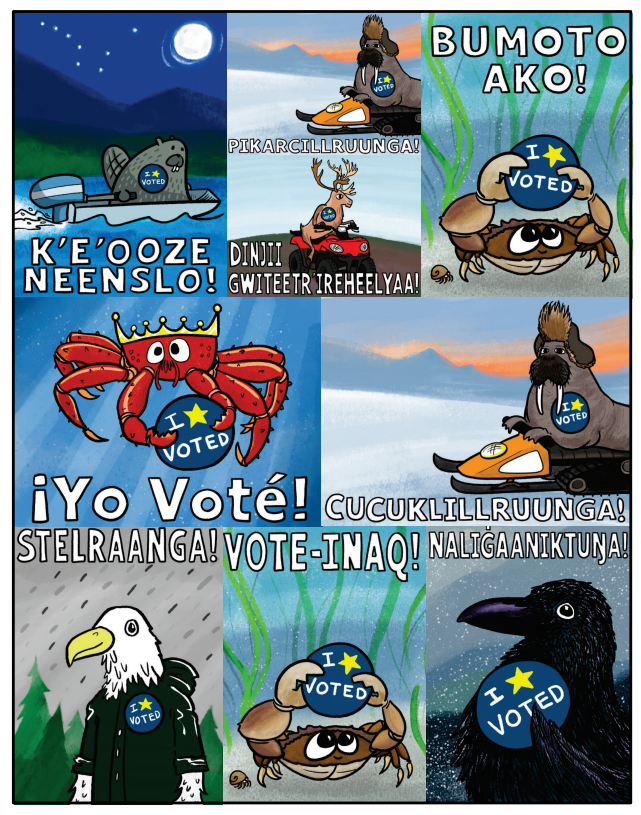
Alaska's early voting stickers!

Sunday, September 30, 2018

The Power of Nature

View from the porch at the AMC Gorham Chairback Lodge.
On the final feet of an extraordinarily challenging hike, the sun was low on the horizon in the final mile back to camp.  Physically out of shape, the earlier miles of the trail entailed a punishing stretch over and around root bound rocks. I was perpetually at the rear, not able to catch up with my new found hiking buddies. My lungs were laboring under exertion and asthma. My pants were sweaty and tight around my waist. I was feeling very old, far away from the lithe and more nimble self of past years and with head down to a tenuous balance of what was just before me and my capacity to continue.

We arose out of the small creek valley, out to the opening where the trail crossed the road in the final stretch home.  At that moment, the waning sunlight beamed through the still green leaves. Vibrant, effervescent, glowing, verdant, rich and hopeful. Despite being the last of the group and slightly overdue on the timeline, I had to take a minute to breathe in the wisdom, glory, and preciousness of this fleeting moment. Summer was ending and the transition of the early fall was underway. I was surrounded by reveling in life.

Storm clouds brewing over Brunswick, Photo BDN/ Jennifer Hicks 
Dramatic weather has its own emotional reaction. The anticipation heralded in dark, black incoming storm clouds led to a hastening fear, and then the sudden flailing of branches as they whipped across the yard. On that day in September and after only 10 minutes, the house across the street had two large trees come down on its roof. I came out of the house and gathered with the other stay-at-home moms and grandmoms, and then we watched together as the tree service came to do the clean-up.

September ended in a flurry of work deadlines, travel to a tiny house festival, and stretched into the first week of October with a move to a new place and capped with a preparation-intensive, age-appropriate medical test.  Now, I am breathing again. My own recovery and clean-up have begun. 


Hours later, clean up in the hood. 


In these rapidly dwindling days of early Autumn, the leaves have begun their changes to the vibrant red, orange and gold. My head is up, now looking to the horizon.  


Fall colors in the garden. 
View from the new house.

Thursday, August 30, 2018

Time for a Proper Nest

In early August, I paddled down the West Branch of the Penobscot River in the North Maine Woods. The trip was guided by the Executive Director of an organization committed to cultivating wilderness encounters that cultivate and sustain cultures of compassion. Each day was filled with reflective quote readings. We stopped on Thoreau Island and read a quote from the Island's namesake who had paddled this river in the early 1800's:

"I have met with but one or two persons in the course of my life who understand the art of Walking, that is, of taking walks - who had a genius for sauntering. The word is beautifully derived from the people who roved about the country in the Middle Ages, and asked charity, under the pretense of going a la Sainte-Terre, or to the Holy Land. Some, however, would derive the word from sans terre, without a land or a home. Therefore, will mean having no particular home, but equally at home everywhere. The saunterer, in a good sense, is no more vagrant than the meandering river, which is all the while sedulously seeking the shortest course to the sea." 

As the spring light emerged into summer, I'd been thinking of moving. I began to ideate a home, remembering that I'd mentioned to friends in Cambodia that I wanted to return to build a Tiny House on Wheels (THOW). I looked at the MLS listings for Bath and Brunswick and began to mention the idea to acquaintances and colleagues. After looking at the price of real estate in the peak of the selling season, I thought about what home meant and why it seemed important now. The thoughts swirled: land, debt-free live, budget, singledom, values, and priorities. I pondered the uncertain future. After the canoe trip, as a true saunterer, I put a foot forward and started the plan. 

Research led me to a mobile home for sale in a wooded park next to the Androscoggin River. The craigslist ad had a complicated financing structure: rent to own and only $3,500 to move in. The fellow who showed me the house grew up in Alaska. It had potential. As we conferred, I asked him about having a THOW in a mobile home park. He quickly replied that there was one placed already, located in a family-owned park on my preferred side of town. I drove over to take a look later that day.

The sun was setting over the blueberry fields adjacent to the park. My heart began to sing with options opening and possibilities unfolding. The door had swung open and the journey had begun onto a path that was already blazed. I left a note on the car parked out front asking for a chat and set myself out on the information gathering phase. 

Last week, I decided to leave my current housing situation, as cheap and convenient as it is, to give myself a structured work plan for this next step. I'll be in a seasonal rental right on the coast just a few miles down the road from my current place. The area is surrounded by open fields and stately homes from the shipbuilder who lived there.  From October until June, I'll stay with an acquaintance whose positive energy, disciplined self-care, and tranquil landscape will fill my well-being. She has two snowblowers and knows how to use them. 

The next months are a time to explore, look around, gather information, and navigate the crux issues for land-less THOW owners. I'm not sure what will evolve from here. A THOW, a condo, a manufactured house, perhaps (although unlikely) a larger house. Maybe I will find a rental again. I am ready for a small place of my own to call home. 

Tuesday, July 31, 2018

July Jublilee


 July was a whirlwind. Here it is in photos and captions:


We had a corner spot for the Nederland 4th of July parade.
There were some curled lips of disappointment.
Others were supportive. It felt good to make a statement. 


Carrie's fantastic porch view in Nederland.


My first foray into a vegetable garden, Kale. Lettuce. Love

Perennial Farm Project looking good.
Stewarding inventory for next year's plant sale
to benefit the Community Garden.  
WTH Travel Idea: go on an overnight yoga retreat
to camp out at someone's family camp on a lake in Northwoods Maine. 

Then follow WTH Travel Idea to do some yoga with
Michael Franti in a farm field.
Then took in a high energy concert with really bad photos but
a great vibe with the other soul rockers. Took a
wrong turn and ended up getting home really late. Living large.


Happenstance encounter with the Yarmouth Clam Festival
made for a fun evening. Ate clams, natch. 
Longest Parade in Maine! Go Girls!


The following weekend I spent at the Mid Coast Hospital. This contraption was in the parking lot.
Mom had emergency surgery but is recovering nicely.
I was thinking a lot about my next step for housing
and this seemed like a very utilitarian, somewhat redneck
tiny house.

Came home from a long day at the hospital and the housemate
was having a little party without telling anyone that her friends would
be camping out in the street overnight. Nice rig kid! It was Daddy's.
I was struck by the contrast with the contraption above.
 

I think she was pissed that I ruined her party
vibe. She moved out a few days later on the
last day of the month. 


I don't know where this image came from, but it felt like a good way to close out this post. 


Saturday, June 30, 2018

Maine Makes History

After lawsuits, allegations of conspiracy and plenty of conjecture, Maine made history on June 12th, when the state was the first in the nation to implement Ranked Choice Voting (RCV). This relatively simple approach asked voters to show their support in nuanced ways. Instead of one or the other, voters were able to demonstrate that who they thought would be a good runner-up in case their candidate didn't win the first round.
http://editions.lib.umn.edu/electionacademy/
wp-content/uploads/sites/3/2018/06/rankedchoicevoting.jpg

For the primary election in June, Republicans elected Sean Moody, a businessman whose auto collision repair company converted to an employee stock ownership plan in 2003) by a clear majority. The Democrats, with seven candidates on the ballot, were left with two that totaled 90% of the votes in total. Thus, all the ballots were shipped to the state capital in Augusta for recounting in the Secretary of State's office. The RCV software counted the second choices on candidates and Janet Mills, an attorney, won 54% of the votes.

There was a surprising lack of drama and confusion as the process unfolded on primary day, but plenty beforehand. The Maine Supreme Court ruled that RCV was unconstitutional, largely because the process outlined in the state's constitution requires a plurality, not a majority. Plurality meaning the largest number of votes. In fact, no Governor has won the majority of an election since 1998. Independents are a powerful force in Maine. Thus, Governor Paul LePage was elected twice, first with 37.6% in 2010, and in 2014 with 48.2%.

Governor LePage is not without controversy. In the early months of my repatriation in 2016, he alleged that the vast majority of drug dealers in Maine were Black or Hispanic and that he had a binder of news articles to prove it. Shortly after, he left a voicemail for a democratic state representative and challenged him to a duel. He's called student protestors "idiots" and displayed a "Wanted" style posters for environmental and labor organizations at a town meeting, and alleged that asylum seekers were the source of the "ziki-fly".

With this track record propelling the action, a coalition banded together to develop and introduce the initiative, passed in 2017, to use RCV in Maine. After some challenges, the system was used in the primary election, but will not be used in the gubernatorial race.  Mainers voted by a vast majority in the recent June 2018 election, to use the RCV process, and other states are looking to Maine for lessons learned from the implementation.

As the RCV process unfolds, I hope we find our way into elections, processes, and discussions that propel us closer to the center of human opinion. RCV gives people a chance to lean into a general direction instead of a yes or no. Plurality leaves a lot of people feeling disenfranchised. The electoral college system has flaws in the concentration of power within a few, as opposed to recognizing the technological advances and power of the collective individual vote.

For now, our country is desperate for connections that overcome short-sighted political agendas. We are seeking a path that will help us refine our national identity to the fundamental principles of the Constitution, The Bill of Rights, and the Declaration of Independence.

There's a deeper nuance to our conversations about how to share the collective elements of our humanity as people. The grief from the loss of a child, adherence to globally accepted conventions, the desire for quality and affordable health care, acceptance across skin color and national origin, compassion for the hard choices that the financially challenged face-- all of these seem to be fundamental, universal principles of being human. I feel now, as disconnected as we are becoming from politics, that we must act in individual action to the common good.

Wednesday, May 30, 2018

Scar Woman


I on a warm morning in May when I liberated my legs of their fuzzy and flaky condition over the long winter. During the ritual, a distinct feeling of unearthing, unpacking, and unfolding emerged. Unlike the new shoots of seeds and the return of familiar perennials, my legs are not fresh; they are mottled by scars. At that moment, I recollected this experience, and so I share it here.
~~~~~~~~~~~~~~~~~~
"Sure, Ellen." Dan said, "You can do it. No problem." Thus, I joined three guys in a truck, with whitewater canoes and kayaks piled atop, as we drove to the remote trailhead on the East Fork of the Matanuska River. The adventure was a culmination of a phase after graduate school when I decided to learn how to paddle a solo canoe in swift water. With a boat, floatation and the variety of artillery that it takes to paddle Alaska's rivers: helmet, drysuit, booties, a paddle, I took lessons. "It's not every 40-year-old woman who decides to learn this stuff for the first time", said one instructor. I had a short window in the spring season to paddle before the hectic elements of my summer-focused job kicked in.
The Dream. Photo by RapidMedia.com

The times when I felt truly confident and balanced in my little canoe were few and far between. The instructors were not the most sensitive sort. One was a homebuilder, who brashly referred to a project as a "lick it and stick it". The only other female in the classes was married to the builder. She hadn't done outdoor stuff before she met him and clarified as she executed a perfect turn, "I had to learn if we wanted to spend time together." I was a pudgy and unsure middle-aged woman, never quite confident enough to truly lean into the groove of my weight and a steady guide of the paddle needed to guide the boat through the current. It required balance, and I always seemed to be off-kilter.

But, as we met early in the morning in the grocery store parking lot, the overconfident leader said it was ok and I believed him. At that moment, I joined an elite squad of bros who drove extraordinary distances and orchestrated complicated shuttles to get time on the water. Hours later, we arrived and unloaded. Amid the men in their nimble squirt kayaks and hearing the sound of water rushing over the rocks in the valley below, I dragged my canoe through the woods to the shore. My small dry bag containing emergency supplies and sundries was clipped to the front thwart of the boat. The sound of the power below fueled an internal dialog raged into a contorted and anxious feeling in my stomach. My beaten canoe, sun-faded after months of ignorance, was my regret for not committing fully to the practice it took to get really good. I wondered how my blood sugar was doing.
Audrey Sutherland in the field. Her
motto, "Go Simple. Go Solo. Go Now." Her memorial and
a list of life skills every teenager should know is located here:
https://www.patagonia.com/blog/2015/03/
go-simple-go-solo-go-now-the-life-of-audrey-sutherland/

Creekside, the water splashed over rocks. It was, as I would have described when I rafted larger rivers, technical. The rest of the boaters go first, happily dancing and bobbing in their little kayaks. Doug waits for me, in another canoe, and I launch. In the first second in the river, I get my angle wrong. The current is faster than I imagined. I am over.

Rivulets of water seep into the cuffs to my dry suit, escalating an limbic response. I clutch my boat and my paddle at the same time as I'm tumbled.  My body bumps up against the rocks: hip. abdomen, arms. On my back with feet downstream, I move to the shore, grabbing for the safety of the plants. I can feel the adrenaline moving through my body as the pain of the bruises are cooled by the frigid mountain water. Doug barks orders, perhaps he's resentful that I went in the drink so quickly. I can see small fish darting about in the eddies of the stream. The water is clean and fresh, unlike the silty, glacial river that I know is downstream. I get back in the boat.  


Within a few miles the river opens up into the slower moving current and I move slowly into the zone of dignity and cheeriness, reclaiming my identity as a somewhat competent outdoorswoman. I recognize that now, with a regular job at hand, I am relegated to the weekend warriors and move from the deskbound stiffness to the flow of the river. I started on ibuprofen on the long trip home. Getting dressed before work on Monday, I counted 18 bruises, some large and fierce. They faded, and I survived. These scars define us.