Wednesday, May 30, 2018

Scar Woman


I on a warm morning in May when I liberated my legs of their fuzzy and flaky condition over the long winter. During the ritual, a distinct feeling of unearthing, unpacking, and unfolding emerged. Unlike the new shoots of seeds and the return of familiar perennials, my legs are not fresh; they are mottled by scars. At that moment, I recollected this experience, and so I share it here.
~~~~~~~~~~~~~~~~~~
"Sure, Ellen." Dan said, "You can do it. No problem." Thus, I joined three guys in a truck, with whitewater canoes and kayaks piled atop, as we drove to the remote trailhead on the East Fork of the Matanuska River. The adventure was a culmination of a phase after graduate school when I decided to learn how to paddle a solo canoe in swift water. With a boat, floatation and the variety of artillery that it takes to paddle Alaska's rivers: helmet, drysuit, booties, a paddle, I took lessons. "It's not every 40-year-old woman who decides to learn this stuff for the first time", said one instructor. I had a short window in the spring season to paddle before the hectic elements of my summer-focused job kicked in.
The Dream. Photo by RapidMedia.com

The times when I felt truly confident and balanced in my little canoe were few and far between. The instructors were not the most sensitive sort. One was a homebuilder, who brashly referred to a project as a "lick it and stick it". The only other female in the classes was married to the builder. She hadn't done outdoor stuff before she met him and clarified as she executed a perfect turn, "I had to learn if we wanted to spend time together." I was a pudgy and unsure middle-aged woman, never quite confident enough to truly lean into the groove of my weight and a steady guide of the paddle needed to guide the boat through the current. It required balance, and I always seemed to be off-kilter.

But, as we met early in the morning in the grocery store parking lot, the overconfident leader said it was ok and I believed him. At that moment, I joined an elite squad of bros who drove extraordinary distances and orchestrated complicated shuttles to get time on the water. Hours later, we arrived and unloaded. Amid the men in their nimble squirt kayaks and hearing the sound of water rushing over the rocks in the valley below, I dragged my canoe through the woods to the shore. My small dry bag containing emergency supplies and sundries was clipped to the front thwart of the boat. The sound of the power below fueled an internal dialog raged into a contorted and anxious feeling in my stomach. My beaten canoe, sun-faded after months of ignorance, was my regret for not committing fully to the practice it took to get really good. I wondered how my blood sugar was doing.
Audrey Sutherland in the field. Her
motto, "Go Simple. Go Solo. Go Now." Her memorial and
a list of life skills every teenager should know is located here:
https://www.patagonia.com/blog/2015/03/
go-simple-go-solo-go-now-the-life-of-audrey-sutherland/

Creekside, the water splashed over rocks. It was, as I would have described when I rafted larger rivers, technical. The rest of the boaters go first, happily dancing and bobbing in their little kayaks. Doug waits for me, in another canoe, and I launch. In the first second in the river, I get my angle wrong. The current is faster than I imagined. I am over.

Rivulets of water seep into the cuffs to my dry suit, escalating an limbic response. I clutch my boat and my paddle at the same time as I'm tumbled.  My body bumps up against the rocks: hip. abdomen, arms. On my back with feet downstream, I move to the shore, grabbing for the safety of the plants. I can feel the adrenaline moving through my body as the pain of the bruises are cooled by the frigid mountain water. Doug barks orders, perhaps he's resentful that I went in the drink so quickly. I can see small fish darting about in the eddies of the stream. The water is clean and fresh, unlike the silty, glacial river that I know is downstream. I get back in the boat.  


Within a few miles the river opens up into the slower moving current and I move slowly into the zone of dignity and cheeriness, reclaiming my identity as a somewhat competent outdoorswoman. I recognize that now, with a regular job at hand, I am relegated to the weekend warriors and move from the deskbound stiffness to the flow of the river. I started on ibuprofen on the long trip home. Getting dressed before work on Monday, I counted 18 bruises, some large and fierce. They faded, and I survived. These scars define us.


Monday, April 30, 2018

Boat People

Pelicans feeding on the southern end of Flamenco Beach.
That's 1975 on the tank. 
On a small island in the middle of the Caribbean, I found myself at home in my skin again. I'm a traveler. It's been two years since I returned to America, and I finally took a short "international" vacation to Puerto Rico.

With fresh water, looming mountains, and arable land as a first stop right smack in the middle of trade winds from Europe, Puerto Rico has migration embedded in the culture. Whoever controlled Puerto Rico dominated commerce in the Caribbean. The Spanish (thanks Christopher!) first colonized the island's people and ruled for 400 years before ceding power back to Puerto Ricans in 1897. Just a year later, the U.S. invaded with Spanish-American War, eventually granting citizenship to residents in 1917.  Of course, this occured just after the first shots of World War 1 were fired from the imposing El Morro fort. Through economic experiments and adversities, Puerto Ricans are united by a fiercely proud culture and identity.  In many conversations I had, people here were undergoing their own migration.

A gumbo limbo tree on an isolated section of beach
between Playa Tamarindo and Playa Menlnes.
Its estimated that over 600,000 people left after the hurricanes. As I arrived at the airport, I encountered a disoriented teenage boy clutching a boarding pass in the baggage claim area. He was directed upstairs for screening, perhaps embarking on his first plane journey alone. A woman, now in the US for over ten years and visiting on a holiday, describes how her 65-year-old grandparents left the island for the first time in their lives in November. Abandoning a damaged home, where they were welcomed by extended family members in Ohio. An Airbnb host told me she lived in the continental US for 40 years before buying a house next to her sister. She invested in a new property on Vieques. Those who remain either have no money to leave or they are fiercely committed to home.

Boats moored in Bahai Ensenada Honda,
on departure from Culebra. 
"When the weather service names a storm," Paul extolled as we puttered around the harbor of Culebra, "You can tie up in the mangroves for protection. Otherwise they are off limits." For people living on boats in the Caribbean, hurricane season is the time when you batten down and hope for the best. I noticed the left thumbnail on his hand had been torn off some time ago, and I wondered how the boat repairs were progressing. He seemed to have a few gigs going on; the boat trip was my small investment in local commerce.

We tooted around a huge luxury yacht with jet skis zipping around, over an unusual colony of cushion sea starts, and past boats of both sail and motor, sinking in abandon. Perhaps left behind by folks who had untied their dingy, headed for shore and never looked back.

I walked most of this route later in the afternoon. 
The trip was so familiar, yet so different. A reminder of what it's like to explore amid people speaking a different language, of unfamiliar customs, of new plants and birds, The glorious sensation of floating in the clear tropical water was a salve to my cold, weather-beaten soul.

With steady work in hand and the beginnings of my third summer in Maine, the trip started a process of considering how to set the stage for what will evolve next. I'm reflecting on thoughts of tiny houses, of a cabana (or two!) as landing spaces in a seasonal migration, or perhaps a boat. There are infinite options, a prospect both thrilling and terrifying. Exploring the Carribean Sea, so accessible to the east coast, seems like a worthy goal for each April.


Thursday, March 29, 2018

Blizzard Brain

When the sun came out after the most recent Nor'easter, everyone seemed a bit confused. After the roads were cleared and I drove to Portland to see clients, I heard the DJ mention she was unsure what day it was. It was a refrain I heard over several instances in completely different circumstances: people not sure of day or date. After a couple of weeks of epic, multi-inch snow storms, school cancellations, rescheduled events, grocery shelves cleared of milk, bread, and wine and the switch to daylight savings time, Mainers were in the throes of a post-blizzard befuddled brain.
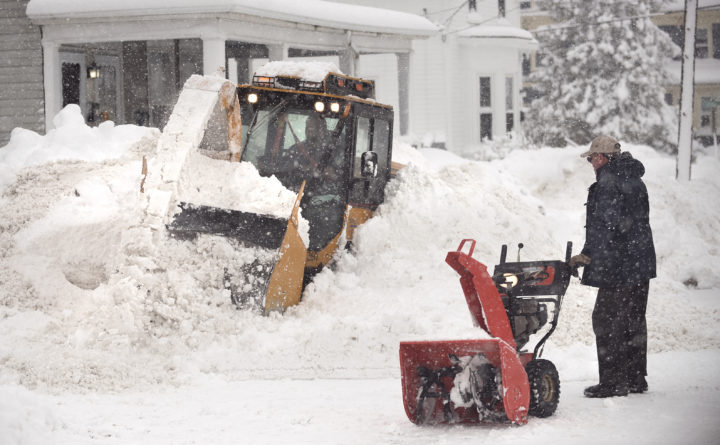
The Four Blizzards of March
(photo courtesy Washington Post)

Through all of it, I had electricity and internet and determination of the ever-falling snow to get my work done. High winds buffeted the windows and the snow created a misty, ephemeral cloud over the neighborhood. I was envious of the super-powered snow removal equipment blasting their way through the streets outside. I wanted to be high above in the cockpit, accomplishing something beyond words on a screen.
Bangor Daily News, March 19, 2018

This winter, in the words of The Washington Post, "was one for the record books."  March's storms demanded flexibility, self-resourcefulness, scheduling and a sense of preparedness. As the apocalyptic news reports triggered reschedulings, I was reminded of a cartoon depicting the preparations for warring posses coming to the main street of the western town: bustling mums, shopkeepers turning their signs and closing the curtains, and the hurried closure of shutters and doors while they anticipated the gunfight to ensue.

As the sun and brilliant blue sky now unfold in the aftermath, we wait for the thaw and the inevitable coming of spring and summer. The sun is getting stronger. Temperatures still hover at the freezing mark. Mainers are feeling the fatigue in the boots that they wish could be tucked away until November.
The morning of March 25th. A little fresher upper. 
I had a housemate in Alaska who was an ultra-marathoner, using my house for training over 6 weeks between Hawaii and his seasonal job in Denali. One day he was gone for hours, running through neighborhoods and across trails.  The front door opened as I worked at the kitchen table when he silently slipped in the door and headed to the refrigerator. He was quick and deliberate at the stovetop, preparing a veggie burger, and moved to the table across from me. He was a man of faith and took a moment. Then he consumed an epic sandwich in gulping bites. Tears ran down his face as the relief of calories hit the depleted cells in his body. I watched in silent wonder.

For now, many of us in northern climes are hungering for warmth and the sun. We stretch like seedlings at the windowsill, beyond the robins flitting about the small patches of grass on south-facing fields and the bare branches full of promise, to the inevitable summer.


Saturday, February 24, 2018

Returns

A major shift in Maine's fifth largest (and my former) employer occurred in early February. L.L. Bean announced that their 106-year-old "satisfaction guarantee" was generally limited to one year from purchase or to those holding a receipt. Resulting news was featured in local, regional and national media. A contributing New Yorker writer from Maine,Ian Crouch, wrote "Even if it seems to have failed as a business model, L. L. Bean’s return policy was treasured largely because it reflected the values and characteristics that we like to celebrate in ourselves and each other as Mainers, ones that we may not always live up to but to which we might aspire—traits like honesty, good nature, and a mind-your-own-business ethos in which asking someone to explain himself is tantamount to calling him a liar." Working at L.L. Bean was a right of passage, a common thread shared across all walks of life. The company builds its brand on Maine's beauty and rural character and had a great reputation for treating its employees well.  
Taking old slippers back was the worst part
of the job at Customer Service.
(AP Photo/Robert F. Bukaty) 


When I grew tired of the relentless and repetitive work at L.L. Bean's cash registers, I asked to be trained in Customer Service. The complexity of using multiple inventory systems seemed intriguing, and the esprit de corps of the team was strong. Just a month after I started the new position, management instituted "special conditions" into the return policy. These reasons to refuse (change in size for both children and adults, personal family reasons such as death, moving, divorce and accidents) were stealthily introduced. Signs disappeared overnight and new language appeared on the website. The customer service department explained the "clarifications" with every person as they placed their questionable item on the counter and responded to the reason for the return.  


Customers reacted. Anger, indignation, resignation, and "it's about time" were common. Dismay and disappointment resulting in tears or aggression were occasional but memorable. People lied. A man commanded the returns area with a loud treatise of "I bought this under the old policy and you should honor it" and was so determined to get his way that he escalated up three levels of management before finally left in a blaze of umbrage. The "clarification" of the policy seemed to be an affront to those who had scammed the system in the past, and now their annual "I want a new backpack." jig was up. 

As the line wound through the cordons of the stuffy cave, I would see people waiting and begin to fear the conversation that would ensue. I was always relieved to see the familiar green shipping bag that indicated an easy transaction. A woman arrived at my station, three girls under 10 years old in tow, and placed a pink sweater, with a small hole under the arm, on the counter. It was sized for an infant, and last sold in 2008. Then came the Red Wing work shoes of a style not seen since the 70's, a brand we had never sold. I could sense her desperation mounting, realizing her plans were dissolving with my response. She tried to retain a brave face in front of her daughters. I sensed that maybe things were not great at home; Christmas was coming. Her last item was acceptable for return and she went on her way with a gift card.  

As the media blitz has faded in the scope of recent news, I suspect that the conversations at Customer Service are much different. The end of the return policy is both a cultural and business shift for the company, and for Mainers. It was good while it lasted but now its no longer. Now, we wait to see how the pending class action suit resolves itself. 

Saturday, December 30, 2017

Not Turning Back

Earlier this month, I realized an error in judgment that had irrecoverable consequences. In the days after, I went to Popham Beach to open myself up to whatever would happen next. There are moments when one needs a horizon and a long walk. Nearby to the beach, in the summer of 1607, a group of English settlers arrived on the shores to set up an encampment and most retreated after one winter.The sand stretched long as the tide receded. Seagulls pecked at large clams washed up on the sand. Beach houses were boarded up, an old hotel and a restaurant had for sale signs on them. An imposing civil war era rock fort faced the Kennebec River's junction with the Gulf of Maine. 
Courtesy WH Ballard Collection | Bangor Daily News

There's been some controversy in recent months within this little community at the end of the road. My interest was piqued last year with a large headline in the Brunswick Times Record,  "Beach Pilings Trigger Uproar".  The issue centers around the remnants of an old pier, which were constructed in the late 1800s by the Eastern Steamship Company. At that time, vacationers would come from Boston for fresh air, and working husbands would see the family on weekends. Popham was a thriving summer community then but recently seems to have suffered some hard times. Popham Beach has a long history of shifting sands, so the natural changes are a given way of life in the area. However, the human changes are more pronounced in recent years. 
Lighthouseguy.com

The owners of businesses have aged, and family priorities have emerged as this little spot at the end of the road has shifted. People are driving in for the day and less inclined to stay overnight unless it's in a cottage they've rented from Saturday to Saturday.  In 2009, a wealthy investor purchased the Beach's historic life-saving station and some adjacent houses, now reportedly surrounded by a tall white fence.  Last year, a longstanding campground was sold to a Massachusetts developer who constructed a large main house and multiple condominiums on the property. In some ways, the transitions have occurred are another reflection of the tension between the "way we live here" and those "fancy people from away."  It seems to be a familiar refrain in this place and point in time. 

The controversy escalated over the past year as a wealthy construction magnate and his wife bought a property that overlooked the old pier, now weathered stumps of wood pounded into the sand, and started to secure the permits needed to remove them. A Facebook group erupted in indignation. People got organized, talked strategy and some made accusations. The magnate commissioned an engineering report that validated his suspicions, went through the permitting process, and was approved a couple of weeks ago. A crane on a barge will come in to shake them loose and remove them, and that part of history will disappear except for photos and memories. 


Courtesy of Bill Hanley | Bangor Daily News
As I walked, I reflected on the past. There are moments in all of our lives that we hope will fade, those times when we were rash, or argued poorly, or just didn't react well. For our personal histories, we should mourn the losses, and acknowledge the times when we regret what happened, and then move on. 

One can only trust in the process of rebuilding in whatever new context will evolve to replace a void. The discomfort in the immediate aftermath of change is the hardest part. Time does heal.  

Thursday, November 30, 2017

My Big Belly

I've physically exploded since being back in America. 18 months of this new life has led to 15 pounds settling around my midsection. I recognize the choices that led me here. I've lost the resolve and commitments I maintained overseas. There's been a lot of driving combined with an escalating workload. Don't get me started about my grief for what is happening in America at this point in time.

On these dark, rainy and cold days, I miss the Southeast Asian culture of communal physical activity. Family and friends gather for walks walk along the river promenades.  "Aerobic" classes, where the brightly dressed instructor counted off repetitions in Thai and arms and legs flailed wildly, were offered in the park for $1,  or the fancy gym in Phnom Penh where I would swim in the outdoor pool glowing in lamplight several nights a week and marvel at the bats feeding just above the surface. Even now, as I drive to one job or another, I look at runners and cyclists alongside roads traversing the neighboring farmland and long for their commitment. My work schedule always seemed to get in the way.

In recent months, as I crept 5 pounds above my "never line" on the scale, the malcontent with my body has settled in like a dark cloud surrounding belly. This area is where I deliver my insulin, by syringe, upwards of 4 times a day. At times, when life is particularly frenetic and I'm doing a shot at a desk or under a table, my belly is peppered with small bruises. This seems to be a normal part of middle age, but I'm not happy with the saggy. Friends and acquaintances ask supportively, "Have you had your thyroid checked?" "You know this happens with menopause, right?" or "What about a class?"

On bad days, I retreat into invisibility, nodding and non-committal to their encouragement. Perhaps my struggle with accepting my belly is just another symptom of the trauma that's affecting the nation. People are worried and humorless, concerned about proposed tax code may impact small entrepreneurs like myself and lots of other Mainers. Or the crazy stuff the President says. I see them on the retail job, hoping to afford a new coat for Christmas. It's not pretty.

I'm exhausted (and at times elated) by the juggle of other priorities that have characterized the past six months, but it is clearly time to try a new tactic and bring in reinforcements to reaching goals. That's why, in December, my frugal self is making an investment. I'm talking to a personal finance coach to tame my wacky puzzle of income, and set financial goals for 2018.

I'm also making an investment to reclaim my life. I'm going beyond the cheap gym in the mall ($100 for a year!) and into a six-month plan with a wellness coach. Maybe some support on the business development too. Because when the going gets tough and there's a big job ahead, it makes sense to build a team.